JVSNUTBOLT
Types of Bolts and Their Uses: A Practical Guide to Hex, Allen, Flange and Foundation Bolts
A bolt looks like the simplest part on any job, which is exactly why the wrong one gets picked so often. Use one that is too weak, too short or wrong for the environment, and you end up with a loose joint, a machine that vibrates itself apart or a structure that cannot carry its load. Choose well and it costs you nothing extra.
Here is a plain-language guide to the four bolts industrial buyers ask for most: hex, Allen, flange and foundation bolts. You will also learn how to read bolt grades and how to pick the right fastener for your project, step by step.
What are the main types of bolts?
The four most widely used industrial bolts are hex bolts, Allen (socket head) bolts, flange bolts and foundation bolts. Hex bolts are the all-rounder for structural and machinery work. Allen bolts suit tight spaces and clean finishes. Flange bolts spread the load without needing a separate washer. Foundation bolts anchor machinery and steel structures into concrete.
There are plenty of other bolt styles in the world, but these four cover the large majority of what construction sites, factories, workshops and fabrication units actually buy. Let us look at each one properly.
The four bolts buyers ask for most
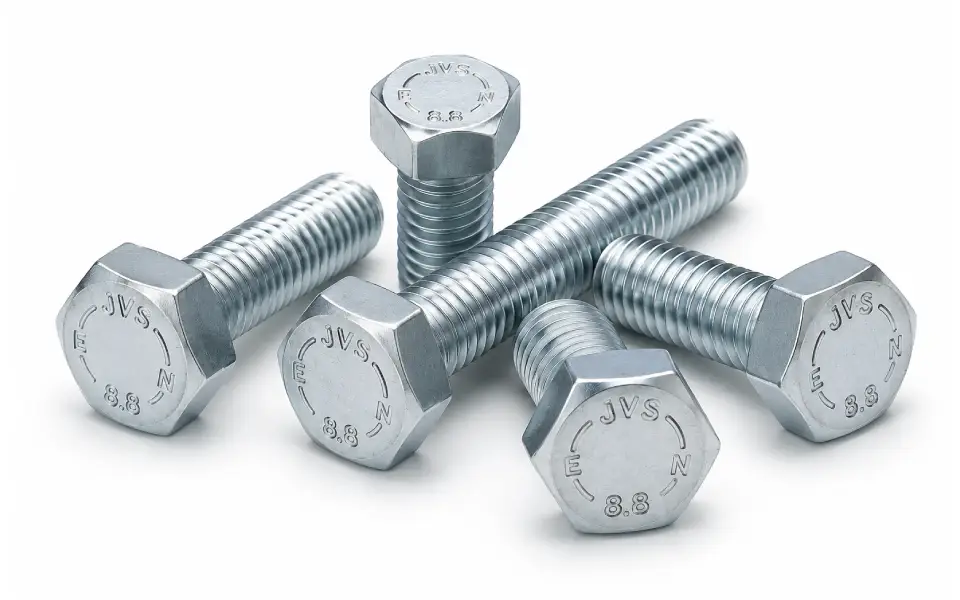
Hex Bolts
Heavy-duty hexagonal head bolts used in structural, automotive and machinery applications. Available in MS and high-tensile grades.
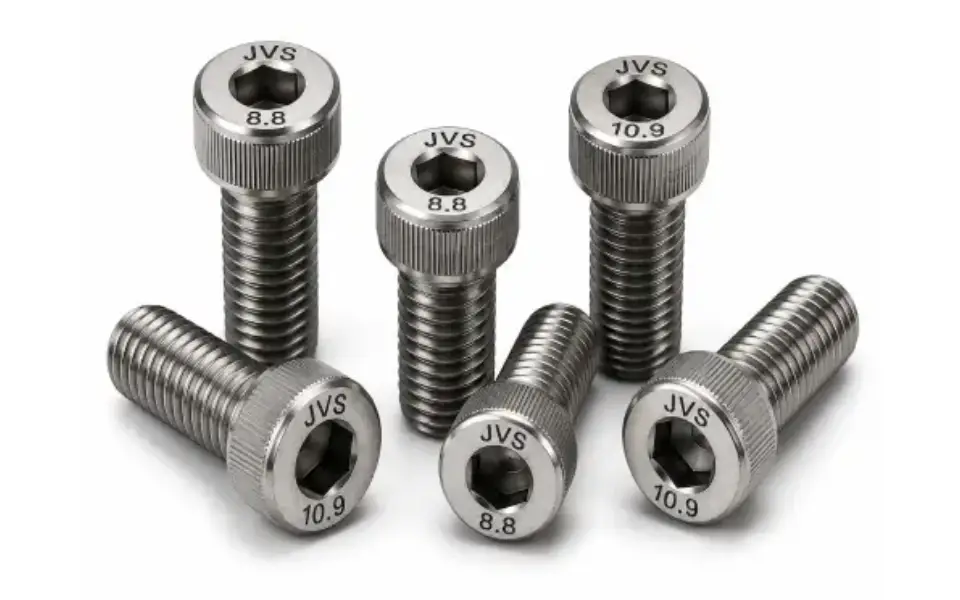
Allen Bolts
Precision socket head bolts for a flush or recessed finish. Ideal for machinery, automotive and tight-space assemblies.
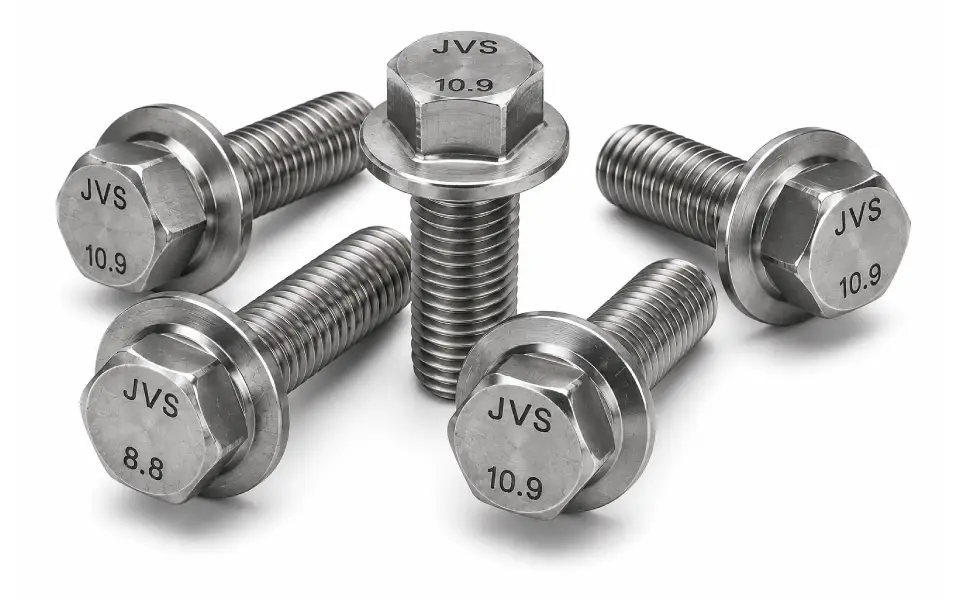
Flange Bolts
Bolts with an integrated flange washer under the head for better load distribution. Used in engines, piping systems and flanged joints.
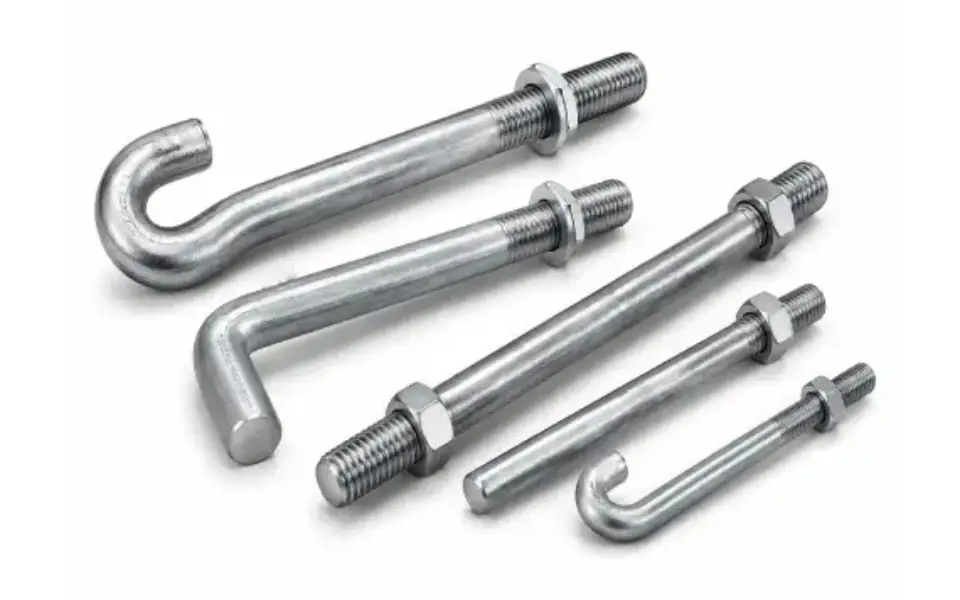
Foundation Bolts
High-strength bolts for anchoring machinery, steel structures, poles and industrial equipment to concrete.
Get Best Quote for High-Quality
Nuts, Bolts, Washer and Threaded Rod
Bulk fasteners supplier in India
👉 Contact our team today for:
- Best pricing
- Technical consultation
- Custom manufacturing solutions
Quick comparison of the bolt types
| Bolt type | Head and drive | Best for | Main advantage |
|---|---|---|---|
| Hex bolt | External hex, spanner or socket | Structural work, automotive, machinery | Strong, high torque, widely available |
| Allen bolt | Internal hex socket, Allen key | Tight spaces, precision assemblies | Flush, low-profile finish |
| Flange bolt | Hex head with built-in flange | Engines, piping, flanged joints | Spreads load, no separate washer |
| Foundation bolt | Embedded in concrete | Machinery bases, steel structures, poles | Secure anchoring to the foundation |
Understanding bolt grades
The numbers stamped on a bolt head, like 8.8 or 10.9, are property classes. A higher number means a stronger bolt, but the right grade is the one your design calls for.
The number has two parts, separated by a dot:
- The first number, multiplied by 100, gives the minimum tensile strength in megapascals (MPa). So in 8.8, the first 8 means roughly 800 MPa. In 10.9, the 10 means roughly 1000 MPa.
- The second number, divided by 10, tells you the ratio of yield strength to tensile strength. In both 8.8 and 10.9, the 8 and 9 mean the bolt starts to permanently stretch at about 80 percent and 90 percent of its tensile strength respectively.
In plain terms, a higher number means a stronger bolt.
Grade 8.8 is the workhorse. It is widely used for general industrial, construction and machinery applications, and for many projects it is the right balance of strength and cost.
Grade 10.9 is stronger. It is generally chosen for more demanding applications where higher mechanical performance is needed, such as heavily loaded joints and critical machinery.
A common mistake: assuming you should always pick the highest grade “to be safe.” Higher-grade bolts cost more, and in some applications they are not the best choice. The right grade is the one the design calls for. If you are unsure, ask your engineer or tell your supplier about the application and let them guide you.
Materials and coatings: protecting the bolt from its environment
Strength is only half the story. The other half is whether the bolt survives the place it is installed.
Mild steel (MS) is common and economical for general applications, especially indoors or where the bolt will be painted or protected.
High-tensile steel is used where more strength is needed, as we saw in the grades section.
Coatings protect steel from rust. Two things are worth knowing:
- Zinc plating gives a thin protective layer and suits indoor or mildly exposed use.
- Hot-dip galvanizing gives a much thicker zinc layer and is the usual choice for outdoor structures, solar mounting systems and anything that sees rain, humidity or dust over many years.
If your bolts will live outdoors, do not leave this decision to the end. A bolt that rusts in two years is a bolt you will be replacing, and in hard-to-reach structures that is expensive. In the solar industry especially, corrosion-resistant fasteners are chosen so the structure holds up over long years of weather exposure.
Looking for a reliable nut bolt manufacturer in India ?
How to choose the right bolt.
- What is the application? Structural steel, machinery, engine, piping or concrete anchoring? This alone usually narrows the choice to one bolt type.
- What load will it carry? Light, medium or heavy, static or dynamic? This decides the grade.
- What is the environment? Indoor, outdoor, humid, coastal, chemical exposure? This decides the coating or material.
- What size do you need? Diameter, length, thread type and pitch must all match the nut and the hole.
- Is there vibration? If yes, think about pairing the bolt with a nylock nut or a spring washer so the joint does not work itself loose.
- How many do you need? For bulk quantities, ask about batch consistency and delivery timelines, not just price.
Mixing up size and thread. A bolt that looks right but has the wrong thread pitch will not seat properly in the nut. Always confirm diameter, length and pitch together.
Ignoring the washer and nut. The bolt is only one part of the joint. A weak nut or missing washer can undo the benefit of a strong bolt. Treat the bolt, nut and washer as a system.
Over-tightening. More torque is not always better. Over-tightening can stretch a bolt past its limit or damage threads. Follow the torque recommended for the size and grade.
Using the wrong grade for the job. Both under-specifying (too weak) and over-specifying (unnecessarily expensive) cause problems. Match the grade to the design.
Forgetting about corrosion. A perfectly strong bolt can still fail early if it was not protected against the environment it works in.
Why buy bolts from JVS Nut Bolt?
JVS Nut Bolt is a brand of Oxford International, and we manufacture from Ludhiana, one of India’s main hubs for manufacturing and engineering. Here is what that means for you as a buyer:
- ISO 9001:2015 certified quality systems.
- 45+ years of manufacturing experience behind the brand.
- Factory-direct supply, so you deal with the manufacturer and not a long chain of middlemen.
- Bulk order capability with timely PAN India delivery.
- Custom manufacturing for specific requirements.
Along with bolts, we also make hex nuts, flange nuts, washers and threaded rods, so you can source the complete fastening set from one place.
FAQs
A hex bolt has an external six-sided head that you tighten with a spanner or wrench. An Allen bolt has an internal hexagonal socket that you tighten with a hex key. Allen bolts are handy where space around the head is limited, and they give a flush finish.
Foundation bolts anchor machinery, equipment, steel structures and poles to concrete foundations. You will find them in construction, infrastructure and industrial plants.
Both are high-strength metric grades. Grade 8.8 is widely used for general industrial, construction and machinery applications. Grade 10.9 has higher strength and is usually chosen for more demanding applications.
The built-in flange spreads the load just like a washer, so you save a part and some assembly time, which matters in high-volume work.
High-tensile bolts are used where greater strength and load-bearing capability are needed, such as construction, automotive, heavy machinery, infrastructure, railways and steel fabrication.
Select based on diameter, length, thread type, pitch, grade, material, load and application. For bulk or custom orders, share the dimensions, drawing or specification with your supplier.
Yes. We specialise in bulk supply of industrial fasteners across India.
Tell us the product type, size, grade, quantity and delivery location, and we will get back with pricing and availability.
Looking for a reliable Nut bolt manufacturer in India or a trusted industrial fasteners supplier in India?
Choose JVS Nut Bolt for premium-quality industrial fasteners, advanced manufacturing, competitive pricing, and trusted fastening solutions for industrial applications.
- Bulk Orders
- Industrial Fasteners Supply
- Custom Manufacturing Solutions
- High Tensile Fasteners
JVS Nut Bolt — Precision. Strength. Reliability.
👉 Still have questions?
Contact us directly—we’ll help you quickly.